1910 / English edition 1912
Gitanjali
Song Offerings—the collection most closely associated with his Nobel recognition.
রবীন্দ্রনাথ
A life without borders
1861—1941 · Bengal / The World
Poet, composer, painter, educator—and a restless believer in human freedom.
The first Asian Nobel laureate created a body of work that moved between the intimate life of Bengal and a vast international imagination.
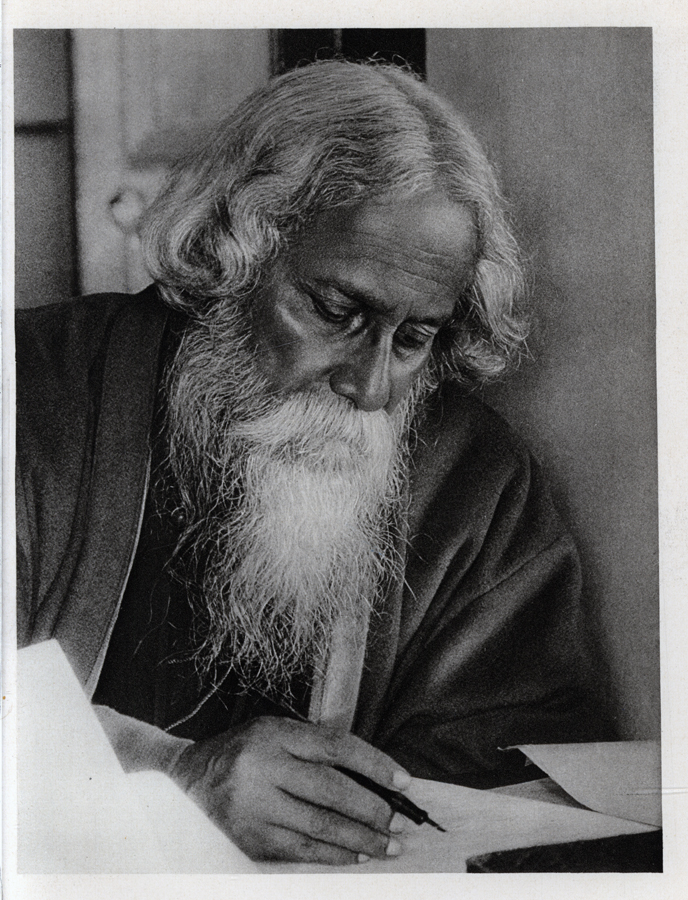
Nobel Prize in Literature
01 / Vision
The world—not as abstraction, but as relationship.
Tagore worked across nearly every literary form, composed songs, painted in his later years, and treated education as a creative act.
His writing carried Bengali literature to a global readership while remaining rooted in landscape, season, language, and common life.
Nobel Prize
School founded
National anthems
02 / Selected works
Scroll to explore ↓
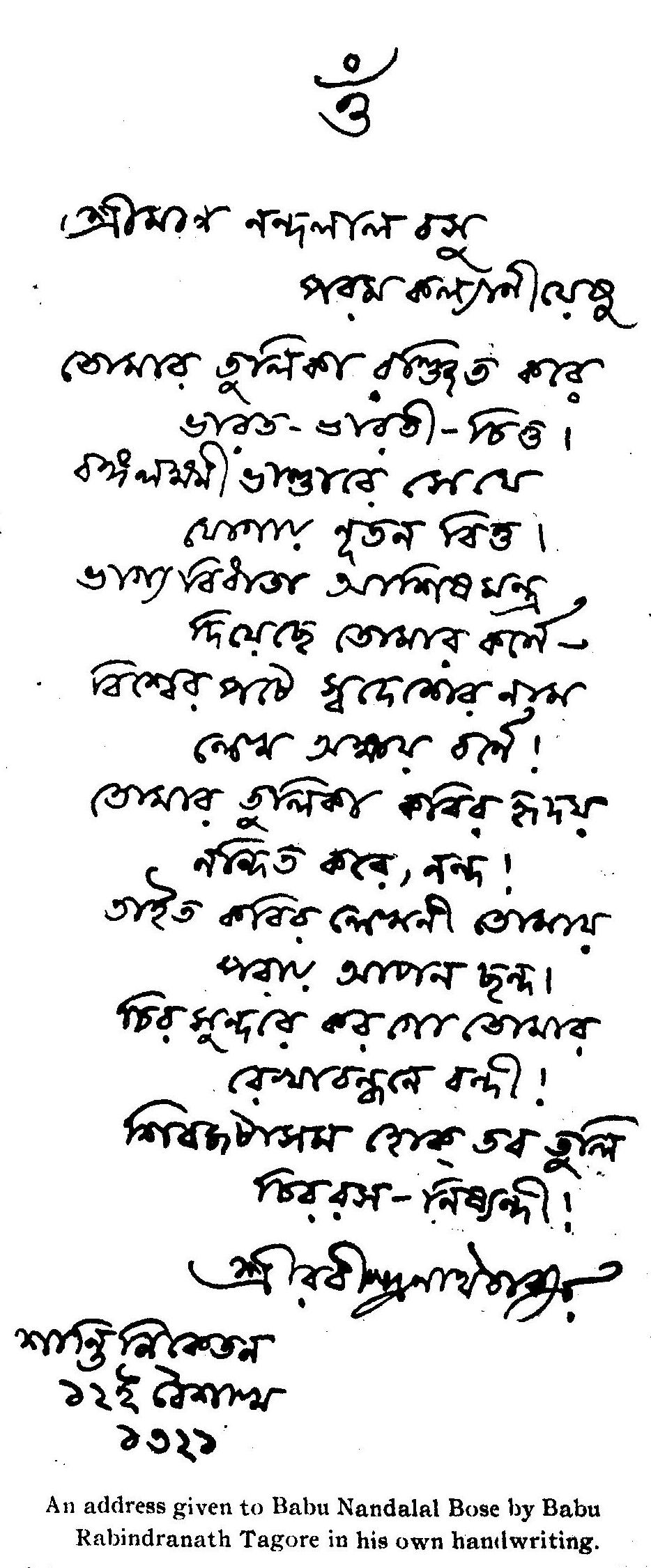
শান্তিনিকেতন
03 / Santiniketan
Tagore imagined learning in dialogue with nature, art, music, languages, and cultures. His 1901 school became the nucleus of Visva-Bharati—a meeting place for India and the world.
Visva-Bharati archive ↗04 / Life
Born on 7 May in Calcutta, into the Tagore family.
Creates an experimental school shaped by nature and freedom.
Becomes the first Asian Nobel laureate.
Dies on 7 August, leaving a vast cultural legacy.
Sources